

Fuel is one of the largest running costs in any transport operation, and one of the easiest to lose sight of. Drivers fill up at different pumps, on different days, for different vehicles running on petrol, diesel or CNG. Receipts get photographed, forwarded, misplaced or entered into a spreadsheet at the end of the month. By the time anyone looks at the numbers, the money has already been spent, and nobody can say with confidence which vehicles are costing more than they should.
Fleet fuel management software fixes this by recording every fill-up in one place as it happens. VectraRide includes a dedicated Fuel Management module that tracks fuel usage and expenses across your fleet, so you can understand consumption patterns, monitor fuel costs as they build up, and identify opportunities to reduce unnecessary spending.
Why Fleet Fuel Costs Are So Hard to Control
Unlike a vehicle purchase or an insurance premium, fuel is not one large bill that gets reviewed and approved. It is hundreds of small transactions spread across vehicles, drivers and weeks. Each one looks reasonable on its own, which is exactly why the total is so hard to manage.
Most fleets run into the same set of problems:
- Scattered records. Fuel bills sit in WhatsApp chats, paper receipts and personal phones rather than a single system.
- Late visibility. Costs are only totalled at month end, long after anything could have been done about them.
- No accountability. When nobody records who filled a vehicle, unusual fill-ups cannot be traced back to anyone.
- Mixed fuel types. Petrol, diesel and CNG vehicles in the same fleet make it hard to compare costs fairly.
Without reliable fuel consumption tracking, even a well-run transport team ends up guessing. A fleet management software platform with a built-in fuel log replaces that guesswork with records you can actually act on.
What Is Fleet Fuel Management Software?
Fleet fuel management software is a tool for recording, organising and analysing every fuel purchase your fleet makes. At its simplest, it is a structured fuel log: each entry captures which vehicle was filled, when, with what fuel, by whom and for how much. Because every entry follows the same format, the data can be searched, filtered and compared in a way a pile of receipts never can.
The real value is what that structure makes possible. Once fuel usage monitoring happens continuously, patterns start to surface. You can see which vehicles are filled most often, which drivers handle the most refuelling, how spending on diesel compares with petrol or CNG, and where the totals are climbing faster than expected. Fuel expense management stops being a monthly reconciliation exercise and becomes an everyday part of running the fleet.
How VectraRide Tracks Fuel Usage and Expenses
The Fuel Management module sits inside the same VectraRide platform your team already uses to manage vehicles, drivers and trips. That matters: fuel records are tied to the same vehicles listed in your fleet management system, so there is no separate list to maintain and no risk of records drifting out of sync.
Log Every Fill-Up as It Happens
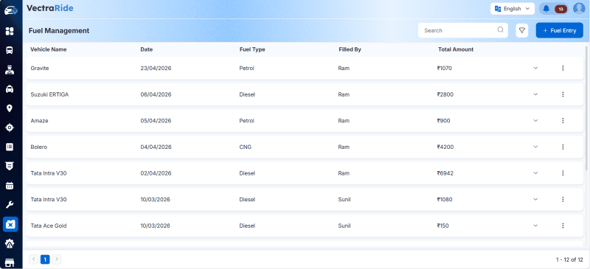
A single Fuel Entry button lets your team add a new record the moment a vehicle is refuelled. Capturing the entry at the time of filling, rather than days later, is the simplest habit that improves the accuracy of your fuel data.
See the Complete Fuel Log at a Glance
Every entry appears in a clean list showing the details that matter most:
- Vehicle Name — which vehicle in the fleet was refuelled.
- Date — when the fill-up took place, so spending can be viewed over any period.
- Fuel Type — petrol, diesel or CNG, so mixed fleets can be compared fairly.
- Filled By — the driver or staff member responsible for the fill-up.
- Total Amount — the cost of the fill-up, ready to be totalled across vehicles and dates.
Find Any Record in Seconds
Search and filter controls sit at the top of the screen, so you can narrow the fuel log to a particular vehicle, fuel type or driver without scrolling through every entry. When a finance team asks about a specific bill, the answer is a few clicks away instead of a hunt through email.
Drill Into the Details
Each row can be expanded to view more information about that fill-up, and an actions menu lets authorised users manage the record. This keeps the main list easy to scan while the full detail stays one click away for anyone reviewing an entry.
Turning Fuel Records into Consumption Patterns
A fuel log becomes genuinely useful once you start reading it as a set of patterns rather than a list of transactions. With every fill-up captured consistently, it becomes straightforward to look at your fleet fuel costs from several angles:
- By vehicle. Spot the vehicles that are filled more often or cost more than similar vehicles doing similar work.
- By fuel type. Compare what you spend on diesel, petrol and CNG to inform future vehicle decisions.
- By driver. See who handles refuelling and whether any individual’s fill-ups look out of line with the rest of the team.
- Over time. Track how fuel spending changes week to week and month to month, and catch upward trends early.
These fuel consumption patterns turn vague concerns into specific questions. Instead of “our fuel bill feels high”, you can ask why one vehicle was filled three times in a week, or why a CNG vehicle is costing more than a diesel vehicle on a comparable route.
Where Unnecessary Fuel Spending Hides
Most fuel waste is not dramatic. It is a steady drip of small inefficiencies that add up over a year. A consistent fuel log helps you find them:
- Unusually frequent refills that do not match the trips a vehicle actually ran.
- Fill-ups that are larger than normal for a given vehicle, which can point to recording errors or misuse.
- Vehicles that consistently cost more than their peers, often a sign that a service or a replacement is due.
- Duplicate or missing entries that distort totals and make budgeting unreliable.
- Fill-ups with no clear owner, which become far rarer once every entry records who filled the vehicle.
Simply knowing that fuel is being tracked changes behaviour. When drivers know each fill-up is recorded against their name and vehicle, careless or unnecessary refuelling tends to fall on its own, which is often the quickest win in fleet cost reduction.
Who Benefits from Fleet Fuel Management
Fuel tracking matters to every type of transport operation:
- Corporate transport teams running an employee transportation management system can tie fuel spend to the shuttles and cabs that move staff every day.
- Schools and transport providers using a school transport management system can keep bus running costs transparent for administrators and budget holders.
- Cab operators using a cab management system can see exactly how fuel affects the profitability of each vehicle.
For teams handling corporate transportation across several sites or vendors, a single fuel log also makes it far easier to compare costs between locations and hold every part of the operation to the same standard.
Best Practices for Reducing Fleet Fuel Costs
Software gives you the data; a few simple habits make sure you use it well:
- Record every fill-up immediately. Make fuel entry part of the refuelling routine, not an end-of-week task.
- Review the fuel log weekly. A short weekly check catches problems while they are still small.
- Compare like with like. Benchmark vehicles of the same type and fuel against each other rather than against the whole fleet.
- Follow up on outliers. Treat an unusual entry as a question to ask, not an accusation, and fix the root cause.
- Link fuel to maintenance. A vehicle whose fuel costs creep up is often due for a service.
If you are weighing up the investment, the pricing plans show how fuel management fits alongside the rest of the platform.
Conclusion
Fuel will always be one of the biggest costs in running a fleet, but it does not have to be one of the least understood. Fleet fuel management software brings every fill-up into a single, searchable record, so you always know which vehicles are being refuelled, by whom, with what fuel and at what cost. From there, consumption patterns become visible, unnecessary spending becomes easier to challenge, and fuel budgets become something you can plan with confidence.
VectraRide builds fuel management directly into the same platform you use to run vehicles, drivers and trips, so better fuel control comes without another tool to learn or another spreadsheet to maintain.
| Ready to Take Control of Your Fleet Fuel Costs?
See how VectraRide’s fleet fuel management software logs every fill-up, tracks fuel expenses by vehicle and driver, and helps your team spot unnecessary spending before it becomes a habit. |